Recent Videos
Showing posts with label Matt Monro. Show all posts

Portrait Of My Love (Cover Version of Matt Monro)

Portrait Of My Love ...

One of the oldies was introduce to me when I was a kid from my late beloved dad was this song. Potrait of my love was sang by many professional singer. Matt Monro was one of them. The Tokens was my late beloved dad's favourite version. So today is father's day and would like to song dedication to him whom he had lef us on July 1st, 2011 after 2 years our most beloved mommy left us on July 13th, 2009.

"Portrait of My Love" is a song written by Norman Newell and Cyril Ornadel, which was a hit for several artists in the 1960s.[1]

In 1960, Matt Monro released a version of “Portrait of My Love”, which reached No. 3 on the UK's Record Retailer chart.[3]

In 1961, Steve Lawrence released a version of “Portrait of My Love”, which became an international hit. The song spent 16 weeks on the Billboard Hot 100 chart, peaking at No. 9,[4] while reaching No. 1 in the Philippines,[5] No. 7 in Australia,[6] and No. 9 on Canada's CHUM Hit Parade.[7]

In 1961, the song won the British Songwriters Guild's Ivor Novello Award for "Outstanding Song of 1960".[8]

In 1962, Steve Lawrence was nominated for a Grammy Award for Best Male Pop Vocal Performance for his rendition of "Portrait of My Love".[9]

In 1965, the song become a Filipino movie theme in the same title under Sampaguita Pictures starring Eddie Gutierrez and Susan Roces.

In 1967, "Portrait of My Love" was covered by The Tokens, whose version reached No. 36 on the Billboard Hot 100.[10]

In 1999, the song was honored at the BMI Awards in London for having 2 million radio plays.[11]


If you can't view over the blog, please click here.

If you can't view over the blog, please click here. Portrait Of My Love  (Cover Version of Matt Monro)

Published on April 22, 2014
Ref: 20140222-00020-SUNP0033 Walk away

FB: https://www.facebook.com/jamesbone006
Backup FB: https://www.facebook.com/pages/James-Nakason/335170904327
Google+ https://plus.google.com/u/0/+JamesNakasoneHuangCareer/posts
Blogger Site http://jntubechannels.blogspot.com/
Blogger Site:http://jncreativeentertainment.blogspot.com/
Download: https://vimeo.com/99999999

Contact: Skype id: jamesnakasone


Recorded at Jerantut, Pahang.
Video Shot by Myself
Video Edited by Myself
"Portrait Of My Love' as sang by Matt Monro.
Written by: David West and Cyril Orander

Category: Music
License Standard: YouTube License
Created using: YouTube Video Editor
Source videos: View attributions

201409200631-00170 Portait Of My Love

From Wikipedia, the free encyclopedia

"Portrait of My Love" is a song written by Norman Newell and Cyril Ornadel, which was a hit for several artists in the 1960s.[1]

In 1960, Matt Monro released a version of “Portrait of My Love”, which reached No. 3 on the UK's Record Retailer chart.[3]

In 1961, Steve Lawrence released a version of “Portrait of My Love”, which became an international hit. The song spent 16 weeks on the Billboard Hot 100 chart, peaking at No. 9,[4] while reaching No. 1 in the Philippines,[5] No. 7 in Australia,[6] and No. 9 on Canada's CHUM Hit Parade.[7]

In 1961, the song won the British Songwriters Guild's Ivor Novello Award for "Outstanding Song of 1960".[8]

In 1962, Steve Lawrence was nominated for a Grammy Award for Best Male Pop Vocal Performance for his rendition of "Portrait of My Love".[9]

In 1965, the song become a Filipino movie theme in the same title under Sampaguita Pictures starring Eddie Gutierrez and Susan Roces.

In 1967, "Portrait of My Love" was covered by The Tokens, whose version reached No. 36 on the Billboard Hot 100.[10]

In 1999, the song was honored at the BMI Awards in London for having 2 million radio plays.[11]


Written by David West and Cyril Orander

There could never be a portrait of my love
For nobody could paint a dream
You will never see a portrait of my love
For miracles are never seen.

Anyone who sees her, soon forgets the Mona Lisa

It would take I know, a Michaelangelo
And he would need the glow of dawn that paints the sky above
To try and paint a portrait of my love

It would take I know, a Michaelangelo
And he would need the glow of dawn that paints the sky above,
To try and paint a portrait of my love


Original Source taken from Wikia


From Russia With Love (Cover Version of Matt Monro)

From Russia With Love ...

This beautiful sound track was here before I was born. Fortunately I managed to watch it many times and love this song too. I decided to have this song tribute to our beloved President of Russia. Mr. Vladimir Putin Владимир Путин whom have shown many good leadership against EVIL PARASITES. I am hoping he would continue do his duty well and get rid of all evil dead cults asap before it become a serious threat to humanity. This soundtrack was sung by our late beloved Matt Monro, the man with a golden voice ...


"The first one won't kill you; not the second, not even the third... not till you crawl over here and you KISS MY FOOT!" 

― Donald "Red" Grant to James Bond.[src]


From Russia with Love is the second film in the James Bond film series, and the second to star Sean Connery as Bond. Released in 1963 in the UK, the film earned over $78 million. It was written by Richard Maibaum and Johanna Harwood and was based on Ian Fleming's fifth Bond novel of the same name.


If you can't view over the blog, please click here.

If you can't view over the blog, please click here. Stranger in the night  (Cover Version of Matt Monro)

Published on April 22, 2014
Ref: 20140222-00020-SUNP0033 Walk away

FB: https://www.facebook.com/jamesbone006
Backup FB: https://www.facebook.com/pages/James-Nakason/335170904327
Google+ https://plus.google.com/u/0/+JamesNakasoneHuangCareer/posts
Blogger Site http://jntubechannels.blogspot.com/
Blogger Site:http://jncreativeentertainment.blogspot.com/
Download: https://vimeo.com/99999999

Contact: Skype id: jamesnakasone


Recorded at Jerantut, Pahang.
Video Shot by Myself
Video Edited by Myself
"From Russia With Love' as sang by Matt Monro.
Written by: John Barry as the primary soundtrack composer.

Category: Music
License Standard: YouTube License
Created using: YouTube Video Editor
Source videos: View attributions

201409200631-00170 From Russia With Love

From Wikipedia, the free encyclopedia

From Russia with Love is the soundtrack for the second James Bond film of the same name. This is the first series film with John Barry as the primary soundtrack composer.

John Barry, arranger of Monty Norman's "James Bond Theme" for Dr. No, would be the dominant Bond series composer for most of its history and the inspiration for fellow series composer, David Arnold (who uses cues from this soundtrack in his own for Tomorrow Never Dies).

Production

Following the decision of the producers not to use Monty Norman, though keeping his "James Bond Theme", Harry Saltzman decided on using the then popular Lionel Bart of Oliver! fame. Bart was unable to read or write music, but he offered to compose the music and lyrics for a title song to the film.
The producers chose John Barry to score the film. Barry had not only arranged and conducted the "James Bond Theme" from the previous film, but had already scored some films such as Beat Girl and Never Let Go. Barry's group also charted at No. 13 in the November 1962 UK charts with a different arrangement of the Bond theme from that heard in the film.[1]
The title song was sung by Matt Monro. Monro's vocal version is played during the film (as source music on a radio) and properly over the film's end titles. The title credit music is a lively instrumental version of the tune preceded by a brief Barry-composed "James Bond is Back" then segueing into the "James Bond Theme". On the original film soundtrack, Alan Haven played a jazzy organ over the theme but this version was not released on the soundtrack album. The tune also appears in a soft string arrangement as a theme for Tania. In Germany, the original release featured an end title track cover version called Die Wolga ist Weit sung by Ruthe Berlé.[2]
Originally planning to use local Turkish music as Norman had used Jamaican music on Dr No, Barry accompanied the film crew to Istanbul, however he found nothing suitable for the film.[3] There are different tracks of Turkish-type music in the film that do not appear on the soundtrack (the track "Leila Dances" is not heard in the film).
In this film, Barry introduced the percussive "007" that came to be considered the 'secondary James Bond Theme'.[citation needed] Barry's instrumental group The John Barry Seven had had a UK chart hit with a cover version of Elmer Bernstein's The Magnificent Seven; both that tune and "007" featured seven beats. It is used in various Bond films starring Sean Connery and also in Moonraker, starring Roger Moore. The arrangement appears twice on this soundtrack album; the second version, titled "007 Takes the Lektor", is the one used during the gunfight at the gypsy camp and also during Bond's theft of the Lektor decoding machine (the soundtrack album version is not heard in the film).
The completed film features a holdover from Norman's Dr. No music – the post-rocket-launch music from Dr. No (after Bond disrupts Dr. No's attempts to jam the takeoff) appears in From Russia with Love at the conclusion of the helicopter attack, and also at SPECTRE's attempt to intercept Bond's speedboat. This cue is absent from the From Russia with Love soundtrack album. The original Barry arrangement of the "James Bond Theme" for Dr. No was inserted by the producers in the film when Bond searches his room in Istanbul for microphones. Barry did a new arrangement of the theme used when Bond leaves London and flies into Istanbul titled "James Bond with Bongos" that Billy Strange did a cover version of for the US charts.
Barry noted that Bart's lyrics used the film's title, but had nothing to do with the film's story, a matter he would rectify when he was assigned the next Bond film, 1964's Goldfinger, which was the first Bond film for which he had total creative control over the soundtrack, including the theme song's music (Leslie Bricusse and Anthony Newley would contribute the theme's lyrics).
Barry's "Stalking", the music for the pre-credit sequence, is echoed by composer Marvin Hamlisch in his score for the 1977 Bond film The Spy Who Loved Me.


From Russia with love I fly to you,
much wiser since my good-bye to you,
I've traveled the world to learn,
I must return from Russia with love. 


I've seen places, faces and smiled for a moment,
but oh, you haunted me so,
Still my tongue tied, young pride,
would not let my love for you show,


in case you'd say no.

To Russia I flew but there and then,
I suddenly knew you'd care again,
my running around is through,
I fly to you from Russia with love.


Original Source taken from Wikia


Stranger in the night (Cover Version of Matt Monro)

Stranger in the night ...

 When I was 16 years old, I was representative of Leo Club (StarHill) of my secondary school and had a grand time in Singapore. One night I was walking outside the hostel at about 3:30 am and I was lonely at that time, unable to sleep. I was walking alone and came a beautiful girl who also outside sitting alone too. We started our stricky conversation after our first HELLO. The Next Morning we started walking hand in hand together and many of my friends were jealous about me of having a new girlfriend. I did gave her my contact address and unfortunately she NEVER write back to me at all. After many years, I still remember her and accidentally I found her in internet fb connection. Unfortunately she did not reply any message at all. LOL ... at that night she was really a stranger in the night and now she is still a stranger in my life ...


If you can't view over the blog, please click here.


Stranger in the night  (Cover Version of Matt Monro)

Published on April 22, 2014
Ref: 20140222-00020-SUNP0033 Walk away

FB: https://www.facebook.com/jamesbone006
Backup FB: https://www.facebook.com/pages/James-Nakason/335170904327
Google+ https://plus.google.com/u/0/+JamesNakasoneHuangCareer/posts
Blogger Site http://jntubechannels.blogspot.com/
Blogger Site:http://jncreativeentertainment.blogspot.com/
Download: https://vimeo.com/99999999

Contact: Skype id: jamesnakasone


Recorded at Jerantut, Pahang.
Video Shot by Myself
Video Edited by Myself
"Stranger in the night ' as sang by Matt Monro.
Written by: Ivo Robic in Croatia language. English version was written by Charles Singleton and Eddie Snyder.

Category: Music
License Standard: YouTube License
Created using: YouTube Video Editor
Source videos: View attributions

201409200631-00170 Stranger in the night


From Wikipedia, the free encyclopedia

"Strangers in the Night" is a popular song credited to Bert Kaempfert with English lyrics by Charles Singleton and Eddie Snyder.[1] Kaempfert originally used it under the title "Beddy Bye" as part of the instrumental score for the movie A Man Could Get Killed.[1] The song was made famous in 1966 by Frank Sinatra.[2][3]

Reaching number one on both the Billboard Hot 100 chart and the Easy Listening chart,[4] it was the title song for Sinatra's 1966 album Strangers in the Night, which became his most commercially successful album. The song also reached number one on the UK Singles Chart.[5]

Sinatra's recording won him the Grammy Award for Best Male Pop Vocal Performance and the Grammy Award for Record of the Year, as well as a Grammy Award for Best Arrangement Accompanying a Vocalist or Instrumentalist for Ernie Freeman at the Grammy Awards of 1967. It became a gold record. Hal Blaine was the drummer on the record and Glen Campbell played rhythm guitar.[

In an interview, Avo Uvezian gave an account of the story behind Strangers in the Night stating that he originally composed the song for Frank Sinatra while in New York at the request of a mutual friend who wanted to introduce the two. He wrote the melody after which someone else put in the lyrics and the song was originally titled "Broken Guitar." After presenting the song to Sinatra a week later, Sinatra did not like the lyrics, so the lyrics were rewritten and the song was renamed and became known as Strangers in the Night.[6]

When asked about why someone else (Kaempfert) was claiming the song, Uvezian went on to say that since Kaempfert was a friend of his and in the industry, he asked him to publish the German version in Germany so the two can split the profits since Uvezian did not feel he would get paid for his work on the song in the US. Uvezian stated that when he gave the music to Kaempfert the song had already been renamed and lyrics revised. Uvezian also stated that Kaempfert also gave him a letter acknowledging Uvezian as the composer.[6]

It is sometimes claimed that the Croatian singer Ivo Robić was the original composer of "Strangers in the Night," and that he sold the rights to Kaempfert after entering it without success in a song contest in Yugoslavia. This has not been substantiated. Robić—often referred to as "Mr. Morgen" for his 1950s charts success with Morgen, created in collaboration with Bert Kaempfert—was rather the singer of the Croatian-language version of the song, called "Stranci u Noći."[citation needed]

It was published in 1966 by the Yugoslav record company Jugoton under the serial number EPY-3779. On the label of the record, B. Kaempfert and M. Renota are stated as authors, wherein Marija Renota is the creator of the Croatian lyrics. The original composition of "Strangers" was under the title "Beddy Bye"—referring to the lead character William Beddoes—as an instrumental for the score of the movie A Man Could Get Killed.[citation needed]

The phrase "Strangers in the Night" was created after the composition, when the New York music publishers, Roosevelt Music, requested that the lyricists Snyder and Singleton—fresh off of "Spanish Eyes," composed by Kaempfert of "Moon Over Naples" fame—put some words to the tune. "Stranci u Noći" is a literal translation of this phrase.[citation needed]

In 1967, French composer Michel Philippe-Gérard (more commonly known as just Philippe-Gérard) established a claim that the melody of "Strangers" was based on his composition "Magic Tango," which was published in 1953 through Chappells in New York.[7] Royalties from the song were thus frozen[8] until a court in Paris ruled in 1971 against plagiarism, stating that many songs were based on similar constant factors.[9]

One of the most memorable and recognizable features of the record is Sinatra's scat improvisation of the melody with the syllables "doo-be-doo-be-doo" as the song fades to the end.[3] Many fans lament the fact that the fade was early and Sinatra's improvisation is cut off too soon.[citation needed]

For the CD Nothing but the Best, the song was remastered and the running time is 2:45 instead of the usual 2:35. The extra ten seconds is just a continuation of Sinatra's scat singing. The track was recorded on April 11, 1966, one month before the rest of the album.

Sinatra despised the song, calling it at one time "a piece of shit" and "the worst fucking song that I have ever heard."[10] He was not afraid to voice his disapproval of playing it live. In spite of his contempt for the song, for the first time in eleven years he had a number one song, and it remained on the charts for fifteen weeks.


The best version from Frank Sinatra
Strangers in the Night is a 1966 studio album by Frank Sinatra. It marked Sinatra's return to #1 on the pop album charts in the mid-1960s, and consolidated the comeback he started in 1966. Combining pop hits with show tunes and standards, the album creates a balance between big band and pop instrumentation. The single "Strangers in the Night" also reached #1 on the pop single charts, while "Summer Wind" would slowly become a classic, used for television commercials and mood-setting entrances by the 2000s.

At the Grammy Awards of 1967 Sinatra garnered two Grammys for his efforts on this album, including the Record of the Year for the title track, as well as Best Male Vocal Performance for the same song. (He also won a further Grammy that same year, the Album of the Year for A Man and His Music). Ernie Freeman's arrangement of the title track won him the Grammy Award for Best Arrangement Accompanying a Vocalist or Instrumentalist.

This is the final album Sinatra performed with long-time arranger/conductor Nelson Riddle and his orchestra.

Strangers in the Night has been certified platinum for one million copies sold in the US. Aside from his Christmas output, it remains Sinatra's only solo studio album to achieve this certification to date.

Also, this album has been reissued as a "Deluxe Edition" on January 26, 2010. Including three bonus tracks (two recorded tracks of "Strangers in the Night" and "All or Nothing at All" performed at the Budokan Hall from 1985, and an alternate take of "Yes Sir, That's My Baby").

In this 2010 version the audio channels are inverted.


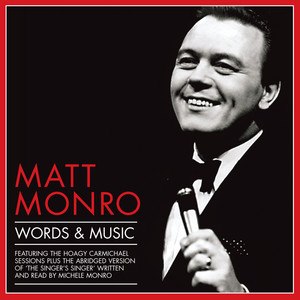
Matt Monro (1 December 1930 – 7 February 1985), known as The Man With The Golden Voice, was an English singer who became one of the most popular entertainers on the international music scene during the 1960s and 1970s. Throughout his 30-year career, he filled cabarets, nightclubs, music halls, and stadiums in Australia, Japan, the Philippines, and Hong Kong to Africa, the Middle East, Europe, and the Americas.


Early Career

He was born Terence Edward Parsons in Shoreditch, London[1] and attended Duncombe School in Islington, andElliott School in Putney.[2] Affectionately nicknamed "the singing bus driver" (because one of his many occupations prior to achieving fame was driving the Number 27 bus from Highgate to Teddington),[citation needed] he got his first break in 1956 when he became a featured vocalist with the BBC Show Band. An important influence on his early career was thepianist Winifred Atwell, who became his mentor, provided him with his stage name, and helped him sign with Decca Records.


In 1957 Monro released Blue and Sentimental, a collection of standards. Despite the album's critical acclaim, Monro languished among the young male singers trying to break through at the end of the 1950s, many of them emulatingFrankie Vaughan by recording cover versions of American hits. (Monro even recorded a version of Vaughan's "Garden of Eden" during this period.) A short recording contract with Fontana Records followed.


By the end of the 1950s, Monro's mid-decade fame had evaporated, and he returned to relative obscurity. He and his wife Mickie lived from her wages as a song plugger and his royalties from a TV advertising jingle for Camay soap. In 1959 he recorded a country pastiche song, "Bound for Texas", for The Chaplin Revue, a feature-length compilation of Charlie Chaplin shorts. It would be the first of


International success

Prior to producing the Peter Sellers album Songs for Swinging Sellers in 1960, George Martin asked Monro to record a satirical ditty to help the comedian imitate the song with a Frank Sinatra-type styling. When Sellers heard the recording he decided to use it to open the record rather than record his own version. However, Sellers billed Monro as "Fred Flange," and though it was a demoralizing experience at the time, the incident developed into a lifelong friendship with Martin, who subsequently asked Monro to begin recording with him for EMI's Parlophone record label. Their second single and Monro's highest UK chart success, "Portrait of My Love", penned by Norman Newell OBE reached number three in the UK Singles Chart.


By the following year, he had been named Top International Act by Billboard. In February 1961, the British music magazine, NME reported that Monro had won ITV's A Song for Britain with "My Kind of Girl".[3] His follow-up hits included that song, plus "Softly as I Leave You" (1962) and the song from the James Bond film From Russia with Love (1963). For the latter, his vocals were not used in the opening titles, as became the standard for the series; they were heard on a radio during the film and over the final credits. At the 1964 Eurovision Song Contest, singing "I Love the Little Things," he finished second behind Italy's 16-year-old Gigliola Cinquetti, despite an "excellent performance of the only English language song of the night."[4] The Austrian entry "Warum nur warum?", performed by songwriter Udo Jürgens, caught Monro's ear, despite its sixth-place finish, and he recorded an English version titled "Walk Away" (lyric by Monro's manager Don Black), earning him another hit single late in 1964. He also had a hit with The Beatles' "Yesterday" in 1965, releasing the first single of the most recorded song of all time, predating even the Beatles' own.


The following year, Monro sang the Oscar-winning title song for the film, Born Free, which became his signature tune. It was also his second collaboration with John Barry, following From Russia With Love. Monro went on to record two further songs from Barry film scores: "Wednesday's Child" (from the film The Quiller Memorandum) and "This Way Mary" (from Mary, Queen of Scots). Both Born Free and "On Days Like These" (from the film The Italian Job) had lyrics by Don Black. On 31 December 1976, Monro performed Black's "Walk Away" on BBC1's A Jubilee of Music, celebrating British pop music for Queen Elizabeth II's impending Silver Jubilee.


Monro achieved fame in the United States when "My Kind of Girl" (1961) and "Walk Away" (1964) hit the Top 40. In 1966, following the death of Nat King Cole, EMI moved Monro from Parlophone to Capitol. After relocating to California and recording several albums with American arrangers, Monro returned to the UK and began appearing on EMI's Columbia label, his final U.S. album release being Close To You in 1970. This LP contained "We're Gonna Change The World", a semi-satirical song about women's liberation, which was not a hit in either the US or the UK but was nevertheless widely played, and became enduringly popular, on BBC Radio 2.


He continued touring and recording until just before his death, releasing a single and promoting it throughout the UK and Australia in 1984. In one of his final appearances, he praised Boy George, noting the importance of quality recordings in all musical genres.


Death and legacy

Monro died from liver cancer in 1985 at the Cromwell Hospital, Kensington, London,[5] leaving a widow, Mickie, and three children: Mitchell, Michele, and Matthew. Mitchell, a professional pilot, also died of cancer in 2004. A memorial was held in Harrow.


The twentieth anniversary of Monro's passing spotlighted the continuing interest in his music, with a Top 10 tribute compilation CD (UK), a No. 1 concert DVD (UK), a BBC TV documentary, and an official website[6] all appearing in 2005. A 2007 compilation CD entitled From Matt With Love reached the Top 40 of the UK Albums Chart during its first week of release. His songs were featured on Friday Night is Music Night on 8 October 2010.


In Autumn 2005 Matt Monro Jnr. toured the United Kingdom with a tribute concert commemorating the anniversary. Also, EMI re-released Matt Sings Monro, a 1995 duet album that combined his voice with the senior Monro's. Another posthumous Matt Monro duet, with Cliff Richard, appeared on Richard's duets CD, Two's Company, in 2007.


Monro never recorded a "live" concert album, preferring the technical purity of the recording studio and wanting his public performances to retain an element of uniqueness. However, in the past few years, commercially-released concert albums have emerged following meticulous remastering of radio and television shows, private recordings he commissioned. These include an intimate 1967 cabaret performance from his first tour of Australia; a 1967 BBC concert with Nelson Riddle; a 1966 arena concert before 24,000 fans in Manila; and one of his final concerts, recorded on the last night of his fourteenth and final Australian tour in 1984.


In recent years, many singers riding the resurging wave of retro-pop have cited Matt Monro as a strong influence, including Michael Bublé, Monica Mancini, and Rick Astley.[citation needed] Musicians' biographies regularly note his stylistic influence on their subjects, including Cass Elliot and Karen Carpenter.[citation needed] He continues to feature prominently on radio stations and CD compilations featuring popular easy-listening vocalists.


His daughter Michele has written a biography, The Singer's Singer: The Life and Music of Matt Monro.


His Music

Most of Monro's recordings were produced or overseen by George Martin. Unlike his contemporaries, Monro recorded very few Tin Pan Alley standards during his career. (The exception was Matt Monro sings Hoagy Carmichael, one of his most highly regarded albums.) Instead, he and Martin searched for material written by promising newcomers and commissioned English lyrics for dramatic melodies written by European composers. He also covered many of the most popular stage and screen songs of the 1950s and 1960s. Over the years, his recordings featured arrangements by Sid Feller, Billy May, John Barry, Buddy Bregman, Kenny Clayton and Colin Keyes, and Martin himself. He also had a long and fruitful musical partnership with British arranger Johnnie Spence. Monro also teamed up with American star arrangers Nelson Riddle and Billy May and leading British bandleader Ted Heath, for concerts broadcast by the BBC.


In 1973 Monro released a vocal version of the popular Van der Valk TV-series theme titled "And You Smiled". It was his final hit. In 1977 he recorded "If I Never Sing Another Song", which became a latter-day standard among his contemporaries, its lyrics referring to the "heyday" of fan mail, awards, and other trappings of celebrity that had faded for them.


Strangers in the night exchanging glances
Wond'ring in the night
What were the chances
We'd be sharing love
Before the night was through

Something in your eyes was so inviting
Something in your smile was so exciting
Something in my heart
Told me I must have you

Strangers in the night, two lonely people
We were strangers in the night
Up to the moment
When we said our first hello
Little did we know
Love was just a glance away
A warm, embracing dance away and

Ever since that night we've been together
Lovers at first sight, in love forever
It turned out so right
For strangers in the night

Love was just a glance away
A warm, embracing dance away

Ever since that night, we've been together
Lovers at first sight, in love forever
It turned out so right
For strangers in the night

Doo be doo be doo
Doo doo doo de da
Da da da da ia ia 


Original Source taken from Wikia


Walk Away (Cover Version of Matt Monro)

WALK AWAY ... my dear FOLKS

Our beloved Late Sir Karpal Singh passed away and I have found this song is suitable to have a song tribute dedicated him personally.  Not only for him but also those had decided migrate overseas due to EVIL PARASITES they had been facing.  Why build a dream, when it can't come true as the song was shouted about.  Goodbye my dear FOLKS ...


If you can't view over the blog, please click here.


Walk Away (Cover Version of Matt Monro)

Published on April 22, 2014
Ref: 20140222-00020-SUNP0033 Walk away
Those who love to listen to my singing and keen to invite me to sing in any concert as your guest singer or xfactor, BGT, AGT, The Voice or any musical events, feel free contact me at london.jamesnakason at gmail dot com. Preferred countries mostly from USA, Canada, Russia, EU, UK, Japan, South Korea, China, Taiwan, Hong Kong, Mongolia, Thailand, Philippines, Australia, NZ, India and South America. I love singing, and play musical instruments like Piano, Keyboard, Guitar, Bass, Harmonica (24 holes), Violin, Recorder (Soprano & Treble-altro), Midi gadgets.

FB: https://www.facebook.com/jamesbone006/
Backup FB: https://www.facebook.com/pages/James-Nakason/335170904327
Google+: https://plus.google.com/u/0/+JamesNakasoneHuangCareer/posts
Blogger: Site: http://jntubechannels.blogspot.com/
Blogger Site: http://jncreativeentertainment.blogspot.com/
Download: https://vimeo.com/99999999
News: X Factor hopefuls experience joy and sorrow at auditions in Sage Gateshead

Contact: Skype id: jamesnakasone or alphajanaka


Recorded at Sunderland, United Kingdom.
Video Shot by Myself
Video Edited by Myself
"Walk Away'' as sang by Matt Monro.
Written by:  lyric by Monro's manager Don Black and music: Udo Jürgens.

Category: Music
License Standard: YouTube License
Created using: YouTube Video Editor
Source videos: View attributions

201409200631-00170 Walk Away


From Wikipedia, the free encyclopedia

Matt Monro (1 December 1930 – 7 February 1985), known as The Man with the Golden Voice,[3] was an English singer who became one of the most popular entertainers on the international music scene during the 1960s and 1970s. Throughout his 30-year career, he filled cabarets, nightclubs, music halls, and stadiums in Australia, Japan, the Philippines, and Hong Kong to Africa, the Middle East, Europe, and the Americas. AllMusic has described Monro as "one of the most underrated pop vocalists of the '60s", who "possessed the easiest, most perfect baritone in the business".[2]


Early Career

He was born Terence Edward Parsons in Shoreditch, London[4] and attended Duncombe School in Islington, and Elliott School in Putney.[5] Matt was first noticed while serving in the British armed forces in Hong Kong.[6]

A regular guest (and frequent winner) of Radio Rediffusion's Talent Time show, he was invited by then-host Ray Cordeiro to perform in his own one-off show, on the condition that he would bow out of future Talent Time episodes to make way for others. Agreeing to the deal, he performed his first on-air concert for Rediffusion on June 27, 1953.[7]

By 1956, Monro had become a featured vocalist with the BBC Show Band. An important influence on his early career was the pianist Winifred Atwell, who became his mentor, provided him with his stage name, and helped him sign with Decca Records.

In 1957 Monro released Blue and Sentimental, a collection of standards. Despite the album's critical acclaim, Monro languished among the young male singers trying to break through at the end of the 1950s, many of them emulating Frankie Vaughan by recording cover versions of American hits. (Monro even recorded a version of Vaughan's "Garden of Eden" during this period.) A short recording contract with Fontana Records followed.

By the end of the 1950s, Monro's mid-decade fame had evaporated, and he returned to relative obscurity. He and his wife Mickie lived from her wages as a song plugger and his royalties from a TV advertising jingle for Camay soap. In 1959 he recorded a country pastiche song, "Bound for Texas", for The Chaplin Revue, a feature-length compilation of Charlie Chaplin shorts. It would be the first of many Monro soundtrack themes.


International success

Prior to producing the Peter Sellers album Songs for Swingin' Sellers in 1960, George Martin asked Monro to record a satirical ditty to help the comedian imitate the song with a Frank Sinatra-type styling. When Sellers heard the recording he decided to use it to open the record rather than record his own version. However, Sellers billed Monro as "Fred Flange," and though it was a demoralising experience at the time, the incident developed into a lifelong friendship with Martin, who subsequently asked Monro to begin recording with him for EMI's Parlophone record label. Their second single and Monro's highest UK chart success, "Portrait of My Love", written by Cyril Ornadel and Norman Newell OBE (using the pseudonym "David West") reached number three in the UK Singles Chart.

By the following year, he had been named Top International Act by Billboard. In February 1961, the British music magazine, NME reported that Monro had won ITV's A Song for Britain with "My Kind of Girl".[8] His follow-up hits included that song, plus "Softly as I Leave You" (1962) and the song from the James Bond film From Russia with Love (1963). For the latter, his vocals were not used in the opening titles, as became the standard for the series; they were heard on a radio during the film and over the final credits. At the 1964 Eurovision Song Contest, singing "I Love the Little Things," he finished second behind Italy's 16-year-old Gigliola Cinquetti, despite an "excellent performance of the only English language song of the night."[9] The Austrian entry "Warum nur warum?", performed by songwriter Udo Jürgens, caught Monro's ear, despite its sixth-place finish, and he recorded an English version titled "Walk Away" (lyric by Monro's manager Don Black), earning him another hit single late in 1964. He also had a hit with the Beatles' "Yesterday" in 1965, releasing the first single of the most recorded song of all time, predating even the Beatles' own.

The following year, Monro sang the Oscar-winning title song for the film, Born Free, which became his signature tune. It was also his second collaboration with John Barry, following From Russia With Love. Monro went on to record two further songs from Barry film scores: "Wednesday's Child" (from the film The Quiller Memorandum) and "This Way Mary" (from Mary, Queen of Scots). Both Born Free and "On Days Like These" (from the film The Italian Job) had lyrics by Don Black.

In the late 60's he recorded another Udo Jürgens song with the name Was Ich Dir Sagen Will. It was adapted to English as The Music Played. Matt recorded a Spanish version of the song with adapted title of Alguien Canto. The Spanish version was a top sales hit (Superventas) in Spain in 1969.[10] Additionally, Monro recorded an English version of Jürgens' 1966 Eurovision winner Merci, Chérie, but it failed to chart when released as a UK single.

On 31 December 1976, Monro performed Black's "Walk Away" on BBC1's A Jubilee of Music, celebrating British pop music for Queen Elizabeth II's impending Silver Jubilee.

Monro achieved fame in the United States when "My Kind of Girl" (1961) and "Walk Away" (1964) hit the Top 40. In 1966, following the death of Nat King Cole, EMI moved Monro from Parlophone to Capitol. After relocating to California and recording several albums with American arrangers, Monro returned to the UK and began appearing on EMI's Columbia label, his final U.S. album release being Close To You in 1970. This LP contained "We're Gonna Change The World", a semi-satirical song about women's liberation, which was not a hit in either the US or the UK but was nevertheless widely played, and became enduringly popular, on BBC Radio 2.

He continued touring and recording until just before his death, releasing a single and promoting it throughout the UK and Australia in 1984. His MD for some of these tours was Mike Hatchard who has also worked with other great singers including Cleo Laine and Frank Holder. In one of his final appearances Monro praised Boy George, noting the importance of quality recordings in all musical genres.[citation needed]


Death and legacy

Monro died from liver cancer in 1985 at the Cromwell Hospital, Kensington, London,[11] leaving a widow, Mickie, and three children: Mitchell, Michele, and Matthew. Mitchell, a professional pilot, also died of cancer, in 2004. Matt was cremated at Golders Green Crematorium on 7 February 1985. The ashes were removed by the family.[12] A memorial service was also held in Harrow.

The twentieth anniversary of Monro's death spotlighted the continuing interest in his music, with a Top 10 tribute compilation CD (UK), a No. 1 concert DVD (UK), a BBC TV documentary, and an official website[13] all appearing in 2005. A 2007 compilation CD entitled From Matt With Love reached the Top 40 of the UK Albums Chart during its first week of release. His songs were featured on Friday Night is Music Night on 8 October 2010.

In Autumn 2005 Matt Monro Jnr. toured the United Kingdom with a tribute concert commemorating the anniversary. Also, EMI re-released Matt Sings Monro, a 1995 duet album that combined his voice with the senior Monro's. Another posthumous Matt Monro duet, with Cliff Richard, appeared on Richard's duets CD, Two's Company, in 2007.

Monro never recorded a "live" concert album, preferring the technical purity of the recording studio and wanting his public performances to retain an element of uniqueness. However, in the past few years, commercially released concert albums have emerged following meticulous remastering of radio and television shows, private recordings he commissioned. These include an intimate 1967 cabaret performance from his first tour of Australia; a 1967 BBC concert with Nelson Riddle; a 1966 arena concert before 24,000 fans in Manila; and one of his final concerts, recorded on the last night of his fourteenth and final Australian tour in 1984.

In recent years, many singers riding the resurging wave of retro-pop have cited Matt Monro as a strong influence, including Michael Bublé, Monica Mancini, and Rick Astley.[citation needed] Musicians' biographies regularly note his stylistic influence on their subjects, including Cass Elliot and Karen Carpenter.[citation needed] He continues to feature prominently on radio stations and CD compilations featuring popular easy-listening vocalists.

His daughter Michele has written a biography, The Singer's Singer: The Life and Music of Matt Monro and has been instrumental, along with sound engineer Richard Moore, in releasing rare and unreleased material by Matt in recent years.


His Music

Most of Monro's recordings were produced or overseen by George Martin. Unlike his contemporaries, Monro recorded very few Tin Pan Alley standards during his career. (The exception was Matt Monro Sings Hoagy Carmichael, one of his most highly regarded albums.) Instead, he and Martin searched for material written by promising newcomers and commissioned English lyrics for dramatic melodies written by European composers. He also covered many of the most popular stage and screen songs of the 1950s and 1960s. Over the years, his recordings featured arrangements by Sid Feller, Billy May, John Barry, Buddy Bregman, Kenny Clayton and Colin Keyes, and Martin himself. He also had a long and fruitful musical partnership with British arranger Johnnie Spence. Monro also teamed up with American star arrangers Nelson Riddle and Billy May and leading British bandleader Ted Heath, for concerts broadcast by the BBC.

In 1973 Monro released a vocal version of the popular Van der Valk TV-series theme titled "And You Smiled", with lyrics written by Melvyn Taggart. It was his final hit. In 1977 he recorded "If I Never Sing Another Song", which became a latter-day standard among his contemporaries, its lyrics referring to the "heyday" of fan mail, awards, and other trappings of celebrity that had faded for them.

Song Lyrics
Walk away, please go
Before you throw your life away
A life that I could share for just a day
We should have met some years ago
For your sake I say
Walk away, just go.

Walk away, and live
A life that's full
With no regret
Don't look back at me
Just try to forget
Why build a dream that cannot come true
So be strong, reach the stars now
Walk away, walk on.

If I heard your voice
I'd beg you to stay
So don't say a word
Just run, run away.

Goodbye my love
My tears will fall
Now that you've gone
I can't help but cry
But I must go on
I'm sad that I after searching so long
Knew, I loved you, but I told you
Walk away, walk on, walk on


Writer(s): Jurgens, Black

Copyright: Hollis Music Inc.


Read more at Wikia
Matt Monro


New templates on your Email

 
Support : Creating Website | Johny Template | Mas Template
Copyright © 2013. JN Creative Entertainment - All Rights Reserved
Template Created by Creating Website Published by Mas Template
Proudly powered by Blogger